
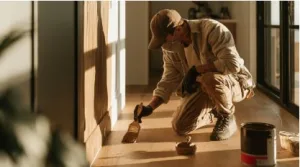
There is no universal paint remover. You scrape, sand, heat, or chemically strip based on three things: the paint, the surface under it, and your goal. The safest choice is the least aggressive method that actually works. Wiping a drip off a window, stripping a chair to bare grain, and prepping a peeling house for a new paint job all follow that same order. Sound paint and failing paint get different treatment, and selective removal usually beats full stripping. If the building predates 1978, read the lead warning before you touch anything.
Do You Really Need to Remove All the Paint?
Most jobs are one of three: cleaning up a spill, stripping to bare material, or prepping for repainting. For repainting, well-adhered paint can usually stay. The National Park Service notes that no removal method is completely safe for the operator or the substrate, which makes total stripping of historic wood a last resort. Find the cause of the failure first. EPA guidance points to moisture, friction, impact, rust, or rot. Fix the cause or the new coating fails the same way.
- Remove it if it is loose, peeling, blistered, chalking heavily, or incompatible with the new coating.
- Leave it if it is tight and will take a new coat after cleaning and a light scuff.
- Investigate first if peeling is widespread, which usually means water is getting in.
Five Things to Check Before You Remove Paint
- The substrate. Wood, drywall, metal, masonry, glass, plastic, and fabric tolerate very different treatment.
- Wet, recently dried, or fully cured. Fresh paint often wipes off with water. Cured paint rarely does.
- Coating type. Oil-based paint needs a solvent such as mineral spirits, not soap and warm water.
- Age of the house or object. This drives the lead question.
- Scale, access, and ventilation. A windowless bathroom and a two-story gable are different projects.
Lead warning: treat paint in any pre-1978 U.S. home as lead-containing unless testing proves otherwise. EPA estimates lead paint in 87% of homes built before 1940, 69% from 1940 to 1959, and 24% from 1960 to 1977, and roughly 31 million pre-1978 homes still contain it. Never dry-sand unknown old paint. No open flame, no heat gun above 1,100°F, no power sanding or blasting without shrouded HEPA capture. Paid contractors fall under EPA’s Renovation, Repair and Painting rule once they disturb more than about six square feet of interior paint per room or 20 square feet outside.
Paint Stripper, Sanding, or Heat: What Is the Best Way to Remove Paint?
| Method | Best for | Main risks |
| Hand scraping | Loose or peeling paint | Slow; sharp corners gouge wood |
| Wet scraping or wet sanding | Dust control on suspected lead | Needs containment; moisture harms some substrates |
| Chemical paint stripper | Layers, carvings, hardware | Fumes, flammability, residue |
| Heat gun | Small wood areas, thick coatings | Fire, scorching, cracked glass |
| Hand or power sanding | Thin film on flat surfaces | Dust; erases detail |
| Grinding or blasting | Heavy coatings on concrete or metal | Easy to overdo; usually professional |
| Pressure washing | Loose exterior coatings | Drives water behind siding, scatters chips |
Paint stripper earns its keep on carved furniture and stacked layers of old oil-based coating. Gel and paste strippers cling to vertical surfaces, and water-based strippers work slower but are easier to use indoors. Dwell times often run about 30 minutes, though that varies by product, so read the label. Lay it on thick, let the finish blister, then lift it with a plastic putty knife rather than a metal blade that digs in. Heat on a low setting softens thick coatings, but it scorches wood, cracks cold glass, and can ignite debris inside a wall cavity.
Paint stripper is sold everywhere from paint stores to Walmart, and the chemicals inside deserve respect. Wear rubber gloves, eye protection, long sleeves, and long pants, and ventilate hard. Keep open flames and pilot lights out of the room. A disposable N95 dust mask filters particles, not solvent vapors, as CDC and NIOSH both state plainly, so respirator choice has to match the label and safety data sheet. Skip old stock labeled methylene chloride or dichloromethane. EPA banned consumer sales of that stuff in 2019, with most commercial uses prohibited as of April 28, 2026.
Choosing a Paint Remover for Wood, Metal, Masonry, and Glass
Wood
Scrape with the grain using a plastic scraper, or a steel one with the corners rounded off. Gel paint stripper suits moldings and carvings, and controlled heat belongs on small areas only. Sand last. Going to bare grain lifts old stain color unevenly, so test a hidden spot.
Drywall and plaster
Scrape loose edges only, feather-sand the transition with dust control, patch torn paper, and seal with a primer made for damaged drywall. A stain-blocking primer keeps old water stains from bleeding through. Widespread peeling means moisture, and sometimes replacing a sheet beats stripping it.
Metal
Small removable pieces take chemical paint stripper or media blasting well. Architectural metal gets scraping, wire brushing, or shrouded power tools, and it tolerates more heat than wood. Rust and oily residue have to come off too, so wipe with denatured alcohol, then prime promptly.
Concrete, brick, and masonry
Porous material holds pigment in the pores after the film is gone. Options include compatible chemical paint removers, scrubbing, pressure washing matched to the substrate, grinding, and shot blasting. ASTM D4258 covers cleaning before light-duty coating, while D4259 addresses abrasion where you need a surface profile. Be careful with old brick and stone, since abrasive cleaning strips the protective outer face.
Glass and glazed tile
Soften water-based paint with a sponge and warm soapy water, then try a plastic scraper. A razor works at a low angle on lubricated, uncoated glass only. Keep heat guns off cold windows, and mask the adjacent trim with masking tape before any stripper goes on.

How Do You Get Dried Paint Off Carpet, Clothing, and Tile?
Wet paint lifts by blotting with a damp paper towel or sponge, and rubbing only spreads it. Dried latex on carpet or fabric responds to a warm soapy solution worked from the outside in, lifting the softened paint with a dull edge. Patch-test any water-soluble paint remover in a hidden spot, because solvents pull dye. For oil-based paint, use the cleanup solvent named on the can. On tile, a 1:1 solution of warm water and vinegar lifts fresh spots, then damp-mop the floor. Dry-clean-only textiles belong with a professional cleaner.
When Should You Stop and Hire a Professional?
Stop signs: suspected lead, multistory exteriors, widespread peeling, unknown coatings, rotten siding, poor ventilation, or valuable historic material. A good estimate breaks out removal, repairs, caulking, priming, and finish coats rather than one lump line. For a large exterior paint job with elevated access or suspected rot, a local contractor can judge whether selective removal is enough. In the Seattle-Tacoma region, https://coverpropainting.com is one regional example listing surface preparation and rot repair alongside painting.
Why Paint Damage After a Fire Is a Different Job
Blistered, scorched, or smoke-stained paint is a symptom. Soot residue, heat-damaged framing, contaminated insulation and HVAC, and lingering odor all have to be addressed, and opening damaged assemblies can disturb lead or asbestos that testing should identify first. Photograph conditions and settle the scope with your insurance company before stripping or discarding finishes. ANSI/IICRC S700, published in 2025, is the professional standard for fire and smoke restoration. Golden Coast Construction & Restoration is one California example of that sequence of testing, mitigation, documentation, and reconstruction.
Cleanup, Disposal, and Prepping for New Paint
HEPA-vacuum and damp-wipe instead of dry-sweeping, then mop hard floors. Bag chips, wipes, filters, and sheeting in heavy plastic, and keep spent paint stripper sludge in a sealed metal container until you can follow state and local disposal rules. Never pour solvent or slurry into a storm drain, and never burn debris. Rinse or neutralize residue exactly as the paint stripper label directs, then let the substrate dry fully, often a day or more after wet methods. Spot-prime bare patches and prime bare metal quickly, because stripper residue wrecks the adhesion of whatever goes on next.
Frequently Asked Questions
Will rubbing alcohol remove paint?
It softens fresh water-based paint and some dried latex on hard, non-porous surfaces, but it dulls finishes and lifts dyes. Test a hidden area first.
Will Dawn dish soap remove paint?
Warm water and dish soap handle fresh water-based paint and light overspray on glass and tile. They will not touch cured or oil-based coatings.
Does vinegar remove paint?
A 1:1 warm water and vinegar solution lifts fresh paint from tile and glass. Mild household chemicals do not dissolve cured paint and are no substitute for a chemical paint stripper.
How do you get dried paint off?
Soften it with warm soapy water, a paint stripper left to dwell per the label, or a heat gun on low. Scrape gently with the grain, sand the remaining film, then clean before priming.